
Overview
On 7 July 2026, four separate maritime security incidents involving commercial vessels occurred within hours of one another in and around the Strait of Hormuz. The incidents involved different vessel types, cargoes and flag states, yet all occurred within the same strategic shipping corridor during a single trading day.
Three vessels sustained physical damage, while a fourth was intercepted and forced to alter course.
For insurers and reinsurers, the events demonstrate how several insured assets can become exposed during a single period of heightened regional tension, reinforcing the importance of continuously monitoring portfolio concentrations within high-risk regions.
At the time of the incidents, Skytek’s Real World platform was continuously monitoring commercial maritime activity across the Strait of Hormuz and the wider Gulf region.
- Over 1,000 commercial vessels were operating within the region.
- Estimated market value exceeded $29 billion.
Incident Summary
On 7 July, four commercial vessels were involved in separate security incidents within the Strait of Hormuz and surrounding waters.
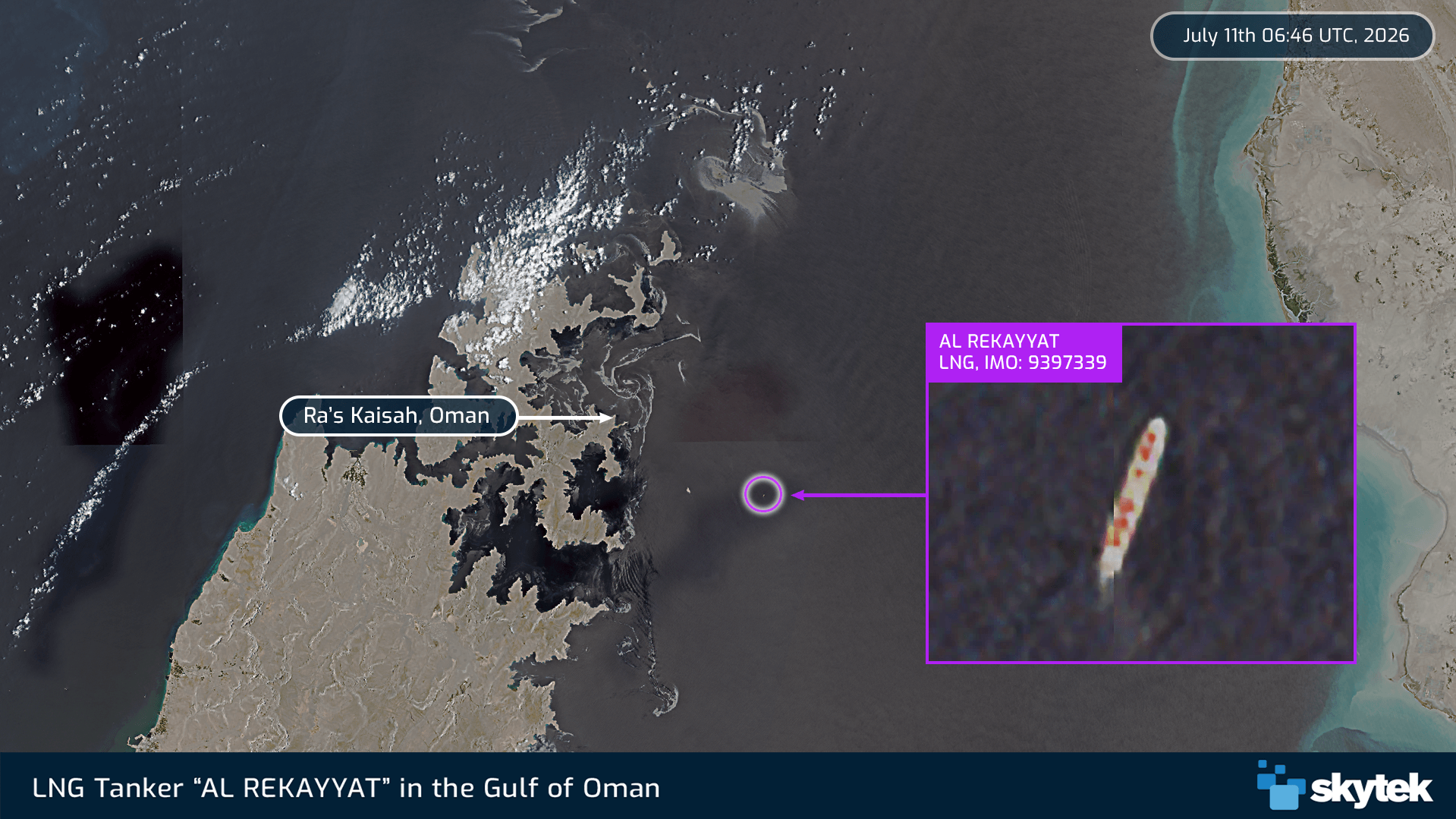
- Al Rekayyat (IMO 9397339) – A Qatari flagged LNG carrier with an estimated market value of $136 million (Skytek valuation model) was struck on the port side by an unidentified projectile while transiting near the Strait of Hormuz. An engine room fire was reported. No casualties or confirmed pollution have been reported.
- Wedyan (IMO 9524970) – The Saudi flagged crude oil tanker sustained damage off the coast of Oman in a separate incident occurring within a similar timeframe and geographic area. The estimated market value is $56 million.
- Cyprus Prosperity (IMO 9595216) – The Liberian flagged commercial crude oil tanker sustained structural damage while transiting near the Omani coast but remained seaworthy and proceeded under her own power to a safe anchorage near Fujairah. The estimated market value is $48 million.
- Al Maryah (IMO 9393682) – The Liberian flagged LPG carrier was intercepted while transiting the Strait of Hormuz with AIS transmissions turned off and was directed by Iranian authorities to alter course towards Iranian waters. Although no physical damage was reported, the incident significantly disrupted commercial navigation. The estimated market value is $65 million.
Aggregation of Exposure
Although each incident involved a different vessel, they shared several important characteristics. All occurred within a few hours of each other, within the same strategic maritime corridor, and affected different vessel classes, cargoes and operators.
Taken together, these events demonstrate how multiple commercial vessels can be affected during the same period of heightened regional tension. While each incident will be assessed individually from a claims perspective, they illustrate the potential for several insured assets to be exposed simultaneously within a concentrated geographic area.
For insurers and reinsurers, maintaining an accurate and up-to-date understanding of portfolio concentrations is increasingly important in regions where security conditions can change rapidly.
Vessel Spotlight – Al Rekayyat
The largest insured asset involved was Al Rekayyat, a 2009-built LNG carrier constructed by Hyundai Heavy Industries.
Using Skytek’s vessel valuation model, the vessel’s estimated pre-incident market value was approximately $136 million, compared with an estimated replacement cost of around $200 million for an equivalent modern LNG carrier.
The reported engine room fire means the ultimate financial impact will depend on the outcome of technical surveys and the extent of repairable damage.
Supporting Exposure Management
Skytek’s Real World platform supports the global insurance and reinsurance market by continuously monitoring insured assets across marine, aviation and energy portfolios. By combining live asset tracking with real-time event intelligence, the platform enables insurers to monitor portfolio aggregations, identify excess exposure within high-risk regions and assess the potential impact of emerging geopolitical events, providing underwriters, exposure managers and claims teams with a continuously updated view of portfolio risk.


