
Summary
Four months after the escalation in the Persian Gulf, vessel traffic through the Strait of Hormuz remains significantly below normal levels.Approximately 380 vessels from the original fleet of over 1,000 vessels remain trapped inside the Gulf,representing an estimated market value of $7 billion, while more than 50 maritime incidents have been recorded since the conflict began, including 25 serious incidents involving severe damage, vessel abandonment, or sinking..
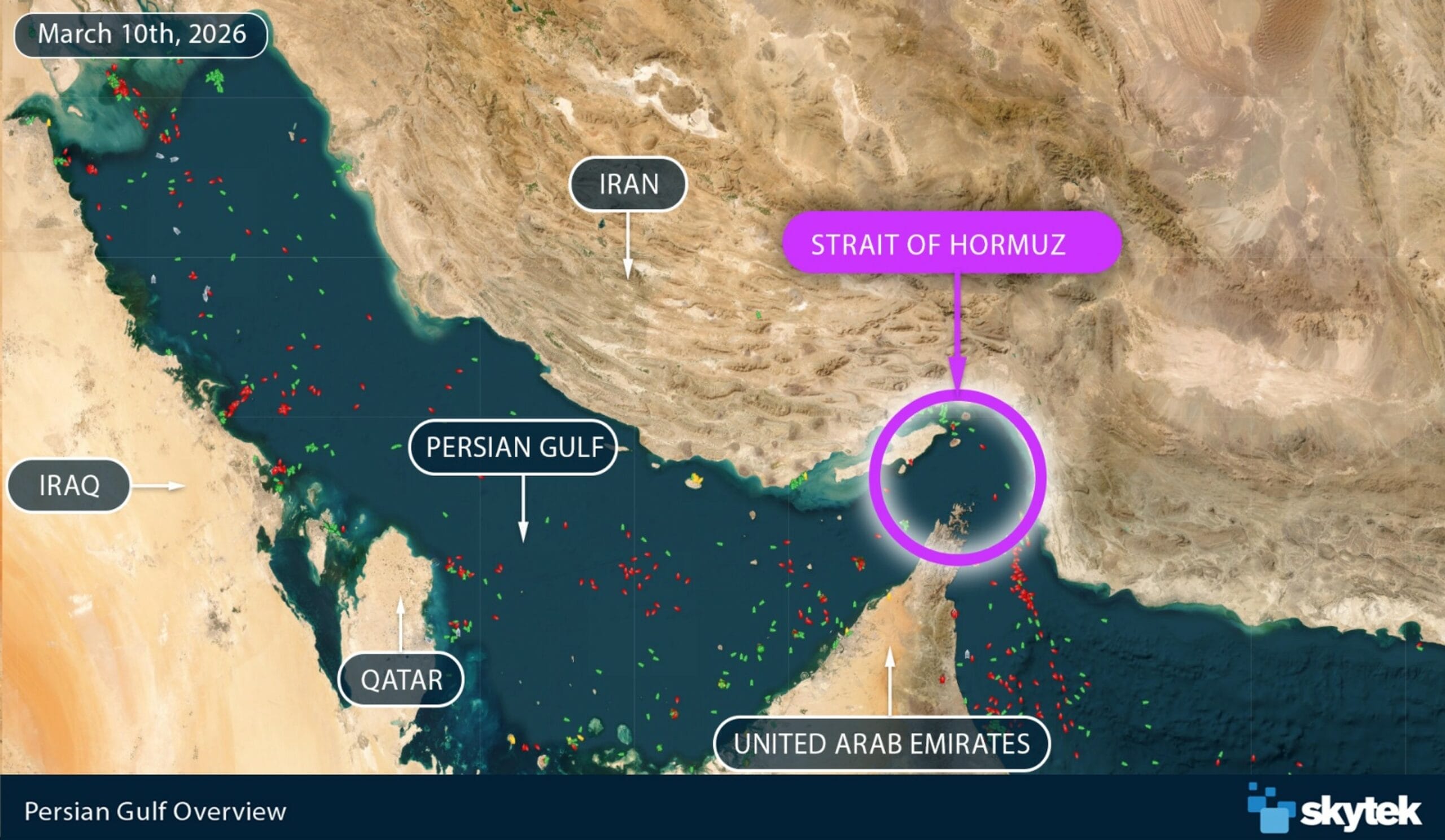
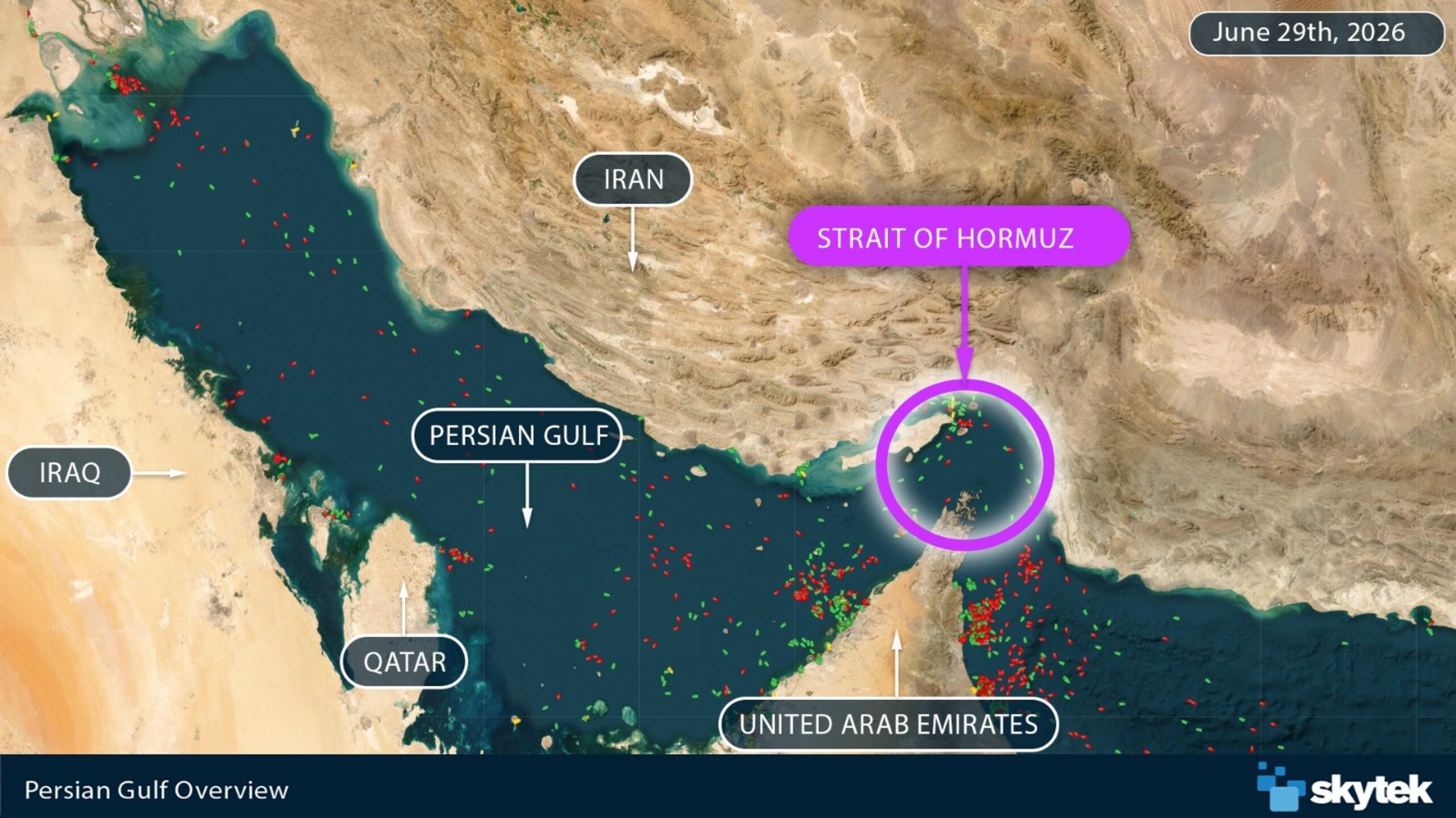
Figure 1 and Figure 2 below captures an overview of the maritime assets exposure in the Persian Gulf on March 10 and June 29, 2026.
Prior to the conflict, the Strait of Hormuz was one of the world’s busiest maritime corridors, with an average of 138 merchant vessel transits per day (merchant vessels above 1,000 GT, excluding offshore and inland traffic).
This changed dramatically on 28 February 2026, when regional tensions escalated sharply and transit activity collapsed.
By 1 March 2026, more than 1,000 merchant vessels were effectively trapped inside the Persian Gulf, representing approximately $27 Billion in market value, and unable or unwilling to transit the Strait due to direct military threats, security concerns, and severe market uncertainty.
Four months later, the maritme environment remains highly disrupted.
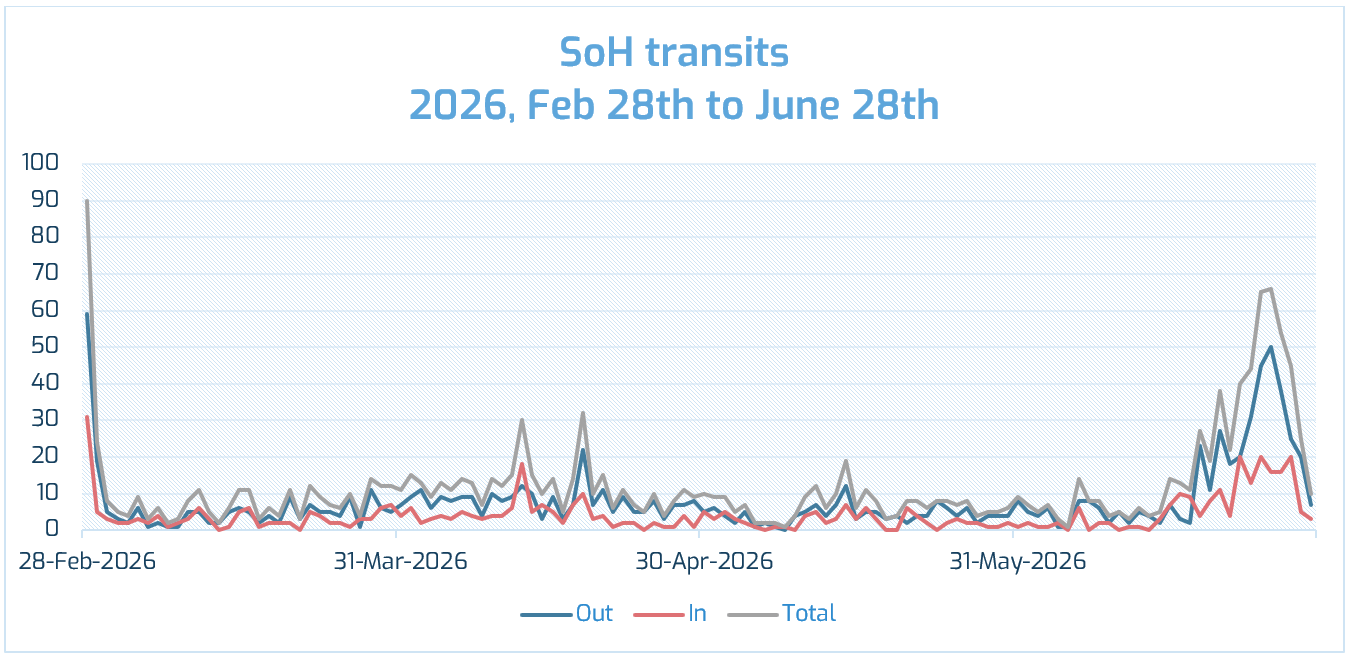
Transit volumes tell the story clearly:
- Pre-conflict average: 138 vessels/day
- Conflict-period average: 12 vessels/day
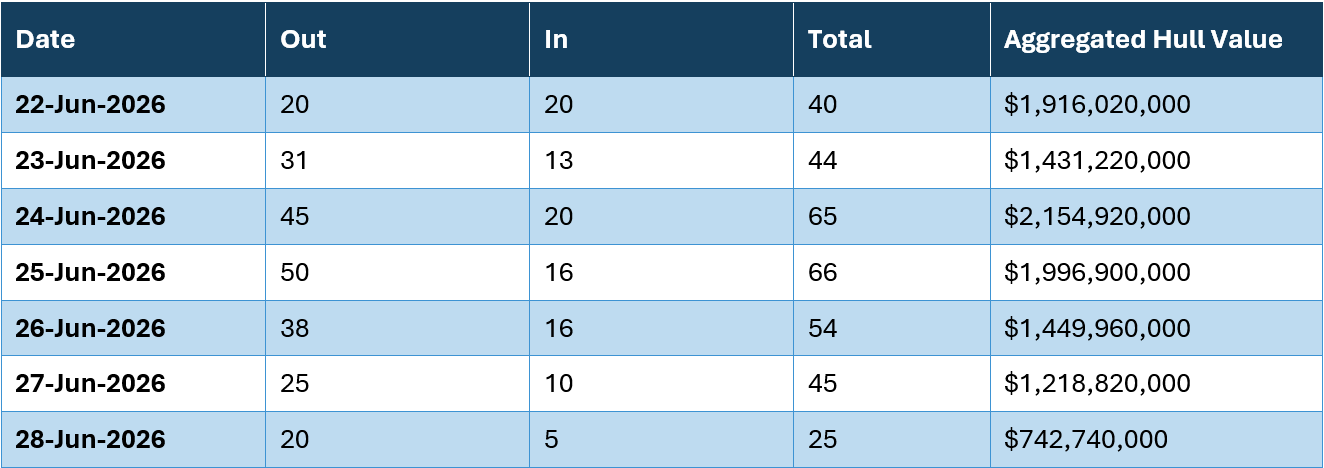
- Current 7-day average: 48 vessels/day
Since 28 February, approximately 1,400 total transits have been recorded through the Strait. Traffic has been highly erratic:
- Only 14 days recorded more than 20 vessel transits
- 23 days saw near-total closure, with fewer than 5 vessels transiting
Following recent ceasefire agreements, traffic has improved modestly (see Figures 3 and 4), but flows remain well below normal levels, indicating that market confidence has not yet fully returned.
Fleet Movement and Vessel Exposure
Since the initial disruption, vessel movement through the region has remained cautious and highly selective. While a significant proportion of the trapped fleet has exited the Persian Gulf, many departures occurred under elevated risk conditions, reflecting continued operational uncertainty.
Of the vessels trapped on March 1st:
- Approximately 65% of tankers have exited
- Approximately 78% of bulk carriers have departed
Many vessels transited under challenging conditions, either operating “dark” (without active AIS transmission) or via Iranian-controlled transit corridors.
Despite these departures, approximately 380 vessels from the original trapped fleet remain inside the Persian Gulf, continuing to face elevated operational and security risk.
For insurers, prolonged entrapment creates an additional concern. Should vessels remain trapped for 12 months or more, there is increasing potential for certain assets to be considered Constructive Total Loss (CTL), depending on policy wording and claims circumstances.
Escalating Maritime Incidents
Skytek has identified more than 50 distinct maritime incidents involving vessels operating in the Persian Gulf since the conflict began.
These incidents include direct hostile fire, vessel abandonment, sinkings, suspected mine-related events, and severe navigation disruption caused by AIS and GNSS interference. Such events have materially increased risk for vessels continuing to operate in the region.
Of these incidents, 25 are classified as serious, involving vessels that have been severely damaged, abandoned, or sunk, resulting in multiple injuries and confirmed seafarer fatalities.
Conclusion
Although the ceasefire has improved transit flows, stability remains fragile.
The continuing threat of direct military action, naval mines, and navigation interference means the Strait of Hormuz remains a critical risk zone for global shipping.
Shipowners, charterers, and insurers must continue to manage an exceptionally volatile environment where routing decisions, asset protection, and exposure management remain highly challenging.
For insurers, this continues to support elevated war risk pricing, tighter underwriting scrutiny, and ongoing uncertainty around regional exposure accumulation.
Skytek’s market-leading capability in detecting and identifying dark vessels provides an additional layer of intelligence in high-risk environments. By combining satellite AIS, SAR imagery, behavioural analytics, and advanced vessel identification techniques, Skytek helps clients maintain visibility even when vessels intentionally disable AIS or attempt to avoid detection, reinforcing Skytek’s proven expertise in monitoring complex maritime risk.


